
Michigan Shipwreck Research Association is a 501(c)3 non-profit corporation, whose mission is to preserve and interpret Michigan’s submerged maritime history. The organization’s work includes research and documentation of submerged cultural resources and the creation of educational resources. MSRA hosts an annual public symposium, maintains this website, and produces a newsletter, documentary films, informative articles, books, and museum exhibits, and it Board of Directors makes presentations to organizations of all kinds.
MSRA’s historical and research materials are preserved in the Joint Archives of Holland, providing a permanent resource for future researchers, historians, educators, and the public.
HISTORY
In 1995, Jack and Valerie van Heest and Craig Rich joined the newly formed Southwest Michigan Underwater Preserve Committee. The group sought to establish Michigan’s tenth underwater preserve in the waters extending from just north of Holland south to Bridgman and westward to a depth of 130 feet—the generally accepted limit for recreational sport diving at the time.
Most Michigan underwater preserves had been established around collections of shipwrecks that had already been located. The proposed Southwest Michigan Underwater Preserve was different. Its boundaries encompassed an area where historical research indicated that dozens of vessels had been lost, yet few wrecks had been located.
The organizers therefore made shipwreck discovery a central part of the preserve’s mission. In 1998, they organized the first annual shipwreck symposium to raise funds to hire the services of renowned Great Lakes shipwreck hunter David Trotter, for a systematic side-scan sonar search, with the primary goal of locating the Chicora, a wooden steamship believed to have been lost within the proposed preserve boundaries. An earlier search using side-scan sonar operator Marty Klein had produced no documented discoveries and yielded limited information for subsequent researchers.
The 1998 and 1999 spring symposiums funded additional search expeditions in partnership with Trotter, but the team failed to locate either the Chicora or another wreck. Nevertheless, the State of Michigan formally designated the Southwest Michigan Underwater Preserve in November 1999.
The preserve committee continued searching in 2000. After three years of historical research and unsuccessful sonar searches, organizers reconsidered their original assumptions. The evidence increasingly suggested that the Chicora had been lost in deeper water beyond the preserve’s 130-foot boundary.
The search consequently moved into deeper water.
In 2001, the team located a large steamship more than 200 feet long. At first, the discovery appeared to be the long-sought Chicora. Subsequent technical dives, however, revealed that the wreck was instead the H. C. Akeley, a large Grand Haven-built steamship lost in 1883.
The discovery demonstrated the value of expanding the search beyond the preserve boundaries. By this time, organizers had developed a database documenting vessels reported lost along the southeastern shore of Lake Michigan. Their research showed that many of the region’s significant ship losses had occurred in water deeper than the 130-foot recreational diving limit.
These findings prompted Jack and Valerie van Heest and Craig Rich, together with researcher Geoff Reynolds, to establish the Michigan Shipwreck Research Association. MSRA expanded the effort beyond the boundaries of the Southwest Michigan Underwater Preserve, focusing on the broader search for lost vessels in the deeper waters of Lake Michigan. The organization also assumed responsibility for the annual symposium, “Mysteries and Histories Beneath the Inland Seas,” which became its principal fundraising event and continues to support MSRA’s mission.
The annual symposium provides an important source of funding for MSRA’s research and exploration, but symposium proceeds alone are not sufficient to support the organization’s full mission. MSRA also relies on grants for projects such as books, museum exhibits, and documentary work, as well as tax-deductible public donations that help fund ongoing operations, equipment, research, and special projects.
EXPLORATION
MSRA explores Lake Michigan to locate vessels and other submerged cultural resources that have been lost to history.
A shipwreck discovery opens a new avenue of historical investigation. Locating a previously unknown wreck allows researchers to revisit the circumstances of its loss, investigate the vessel’s history, and examine physical evidence that may answer questions left unresolved by historical records. For vessels lost without surviving witnesses, the wreck itself can provide the final chapter of the story.
From 2002 through 2016, MSRA used proceeds from its annual symposium to support extended search expeditions in partnership with renowned Great Lakes shipwreck hunter David Trotter. From 2004 through 2017, MSRA also partnered with Clive Cussler and the National Underwater and Marine Agency (NUMA) on extended expeditions, including searches for Northwest Airlines Flight 2501.
Since 2016, MSRA has owned and operated its own side-scan sonar system, enabling the organization to conduct independent searches. These expeditions and partnerships have resulted in the discovery of more than 20 previously undocumented shipwrecks, many of considerable historical significance.
Among these discoveries was the Hennepin, the world’s first self-unloading freighter. MSRA documented and researched the wreck and nominated it to the National Register of Historic Places, resulting in the first shipwreck in Michigan waters of Lake Michigan to receive that designation.
RESEARCH
Research provides the foundation for every aspect of MSRA’s work. The organization investigates the historical record to identify lost vessels, understand the circumstances of their disappearance, and place each ship within the broader history of Great Lakes commerce and transportation.
MSRA researchers draw upon newspapers, government records, archival collections, vessel registries, historical photographs, oral histories, and other primary sources. This research helps identify potential wreck sites and provides the historical framework necessary to interpret the physical evidence found underwater.
Research also brings the human dimension to shipwrecks. The stories of vessels reveal the lives of the people who built, owned, operated, and traveled aboard them, as well as the communities and industries that depended upon them.
DOCUMENTATION
MSRA documents shipwrecks as archaeological sites, preserving information that can reveal how a vessel was built, how it operated, how it was lost, and what happened during its final moments.
Measurements, structural features, construction methods, machinery, cargo, and patterns of damage can help identify a vessel and reconstruct its history. Even seemingly minor details—a fastening, fragment of cargo, piece of machinery, or arrangement of structural members—can provide evidence unavailable in historical records.
Depending u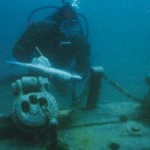 pon a site’s depth, condition, accessibility, and historical significance, MSRA conducts surveys using measurements, site plans, drawings, artist renderings, composite photographic mosaics, artifact documentation, and still and video photography.
Documentation also helps divers understand a wreck before entering the water. Surveys can identify unstable structures, fishing nets and lines, entanglement hazards, sharp metal, and areas where the layout or condition of a wreck may create disorientation, particularly on deep dives.
Most importantly, documentation creates a permanent record of a site. Underwater wrecks continually change through natural deterioration, storms, currents, ice, and human activity. Careful documentation preserves information that might otherwise be lost.
The study of the remains of a shipwreck can provide a wealth of information. Measurements of the ship and a documentation of its construction can help to positively identify the ship. Damage to the vessel can provide reasons why the ship sank and can help draw conclusions about the final moments aboard the doomed vessel. A study of its construction methods offer insight into shipbuilding. Remains of its cargo bring to light information not otherwise available in historical archives. Shipwrecks provide a wealth of Information.
Depending upon the shipwreck, its depth, and its potential to offer historical information, MSRA engages in Type I and Type II archaeological surveys, producing scaled drawings, artists renderings, composite mosaic images, artifact documentation, and still and video photography of the sites.
For divers who may visit a shipwreck site, MSRA’s survey work provides an assessment of the safety of the site from hazards such as lack of structural integrity, possible entanglements in nets and lines, and potential disorientation. It also offers divers the opportunity to familiarize themselves with the layout and condition of a wreck before attempting a dive, which is of particular importance if it is a deep dive.
PRESERVATION
MSRA promotes the responsible stewardship of Michigan’s underwater cultural heritage.
Shipwrecks are protected by state and federal laws, and unauthorized removal or disturbance can permanently destroy archaeological evidence. Preservation therefore begins with understanding and documenting a site before its physical remains or historical information are lost.
MSRA assesses the condition and significance of newly discovered wrecks and encourages practices that protect their archaeological and historical value. The organization also recognizes that responsible recreational diving can foster public appreciation and stewardship.
When appropriate, MSRA supports making documented wreck sites accessible to responsible sport divers. By sharing knowledge about a wreck’s history, condition, and hazards, MSRA encourages divers to experience these sites while helping ensure that they remain available for future generations.
INTERPRETATION
MSRA’s ultimate objective is to bring the history discovered beneath the water to the public. Interpretation transforms research, exploration, and documentation into stories that connect people with Michigan’s maritime past.
MSRA shares its discoveries through this website, its virtual museum, documentary films, articles, books, museum exhibits, presentations, and the annual Mysteries & Histories Beneath the Inland Seas symposium in Holland, Michigan. The symposium serves both as a public forum for sharing new research and discoveries and as MSRA’s principal annual fundraising event.
MSRA members also present their research to historical societies, museums, libraries, service organizations, educational groups, maritime conferences, and other community organizations. To arrange a presentation for your organization, please visit the Contact page.
The Shipwreck portal on this website brings together historical research and underwater documentation to tell the stories of individual vessels. These stories extend beyond the wreck itself, revealing the development of Great Lakes commerce and shipbuilding, the lives of sailors and passengers, the communities that depended upon maritime transportation, and the risks faced by those who worked upon the lakes.
Since 2008, MSRA partners with IN-DEPTH EDITIONS, a small press publisher to publish the books of our Board, partners, and membership. For a list of published works see the “Store” link on this website.Also since 2008, MSRA has maintained a partnership with Lafferty van Heest and Associates to produce the content of the virtual museum and exhibits in partnership with other institutions. Visit Lafferty van Heest for more information.